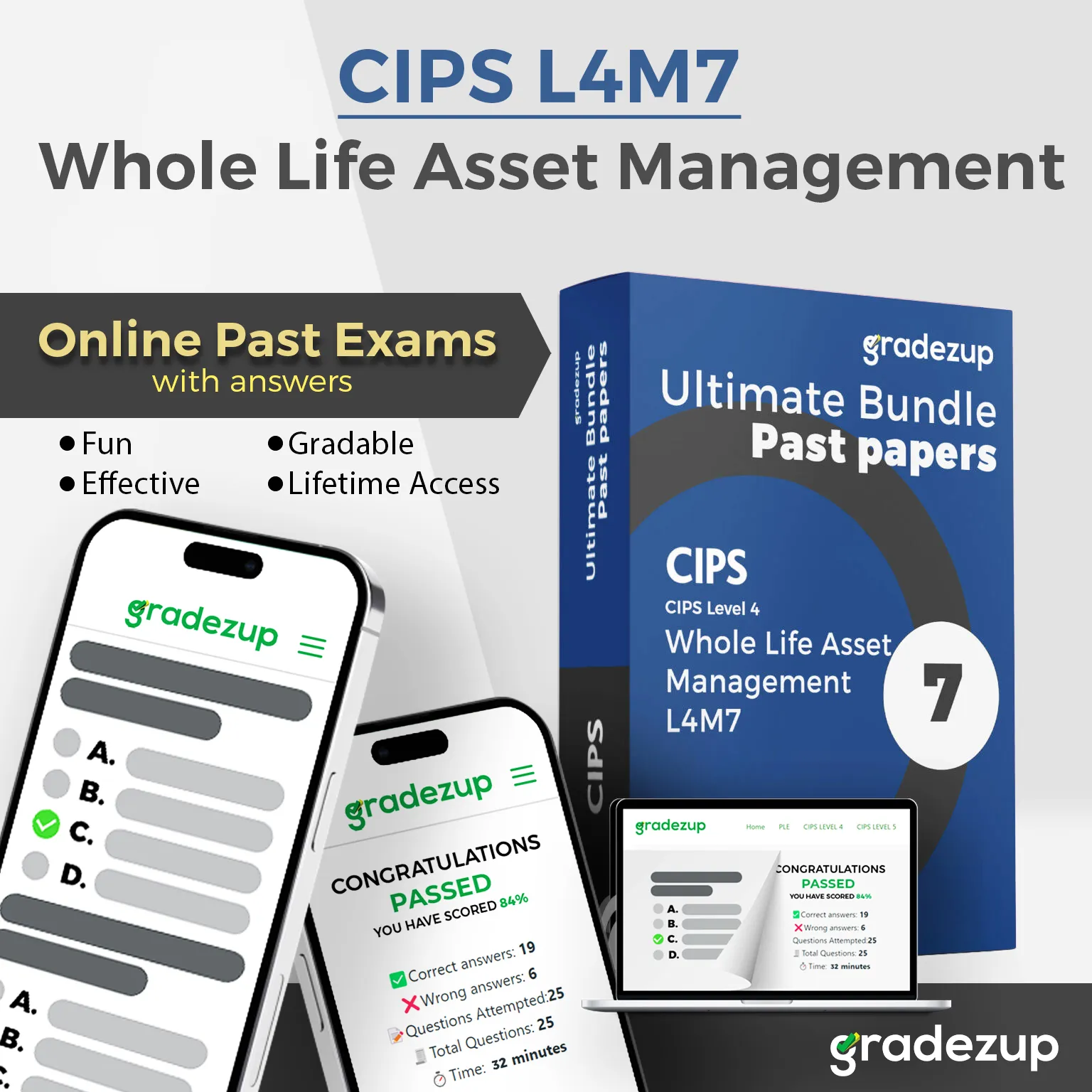
CIPS L4M7 Whole-Life Asset Management is a core module of the CIPS Level 4 Diploma in Procurement and Supply, worth 6 credits. It is assessed by a 1.5-hour objective-response (multiple-choice) exam. It teaches you to explain methods of inventory management, inventory analysis and the concept of whole-life asset management cost, from idea through to disposal.
Prepare for the CIPS Diploma in Procurement and Supply with ease. Failing and retaking exams can be costly, but fret no more. Our meticulously crafted set of questions is designed to assist you in acing your exam on your first attempt. This bundle includes timed practice papers and lifetime access to newly uploaded papers.
CIPS L4M7 Whole-Life Asset Management is a core module of the CIPS Level 4 Diploma in Procurement and Supply, worth 6 credits. It is assessed by a 1.5-hour objective-response (multiple-choice) exam. It teaches you to explain methods of inventory management, inventory analysis and the concept of whole-life asset management cost, from idea through to disposal.
Is L4M7 a core or elective module?
L4M7 is a core module of the CIPS Level 4 Diploma in Procurement and Supply, worth 6 credits.
What type of exam is L4M7?
L4M7 is assessed by a 1.5-hour objective-response exam made up of multiple-choice questions.
What is the L4M7 pass mark?
You need 70% to pass an objective-response exam.
How many L4M7 practice papers are there?
Gradezup has 17 timed L4M7 practice papers with 395+ questions, written to the official syllabus, each marked the moment you submit with an explanation for every answer. At least one paper is free to try, no payment needed.
Are these the official CIPS L4M7 past papers?
No. CIPS does not publish its live exam papers. Gradezup papers are original exam-style practice papers written to the official L4M7 syllabus and modelled on the style and difficulty of the real exam.
What do I get when I enrol?
17 timed practice papers, 395+ exam-standard questions in total, each one auto-marked the moment you submit, with a worked answer and the reasoning behind every option. Your scores are tracked across attempts so you can see what is improving.
Do I have to work through the papers in order?
No. Every paper in CIPS L4M7 Whole-Life Asset Management unlocks as soon as you enrol, so you can start wherever you are weakest and retake any paper as often as you like.
How long do I have access?
Access does not expire. Once you enrol the course stays on your account, including any papers added to it later.
Can I pause a paper and finish it later?
Yes. Any paper can be paused mid-attempt and resumed from the same question, which makes short practice sessions workable.
What device do I need?
Any device with a browser — desktop, tablet or phone. There is nothing to install and nothing to download.
How close are these to the real CIPS level 4 exam?
Every paper is written against the current CIPS level 4 syllabus and mirrors the structure, question style and difficulty of the real exam, so practising here rehearses the exam itself rather than the topic in the abstract.
What is peer review?
Written answers cannot be auto-marked, so this course lets you submit yours for review by other learners working the same papers — and review theirs. Marking someone else against the rubric is usually the fastest way to see what an examiner is looking for.


Reviews
There are no reviews yet.